How Do You Actually Decide What Storage Type Your Items Really Need?
Let’s be honest—most people don’t think about storage until they’re already knee-deep in boxes. Then comes the big question: do I need climate controlled storage or will a standard unit do the job?

From our experience at ABA Movers, this decision is not just about price—it’s about risk management. We’ve seen clients save a few dollars upfront and lose thousands in damaged furniture, warped wood, or fried electronics. And yeah… that hurts.
So let’s break it down in a way that actually helps you make a smart call.
What’s the Real Difference: Climate-Controlled vs Standard Storage Explained Simply
At the core, it comes down to temperature control and humidity protection.
| Feature | Climate-Controlled Storage | Standard Storage |
| Temperature | Regulated (usually 55–80°F) | Follows outdoor conditions |
| Humidity | Controlled | Not controlled |
| Protection Level | High | Basic |
| Cost | Higher | More affordable |
| Best For | Sensitive, valuable items | Durable, short-term storage |
Think of climate-controlled storage as a “safe environment” and standard storage as a “basic shelter.”
When Climate-Controlled Storage Becomes a Necessity, Not a Luxury
Here’s where many people underestimate risk.

In our opinion—and based on real cases we’ve handled—climate-controlled storage is essential when:
You have temperature-sensitive items
- Electronics (TVs, computers, gaming setups)
- Artwork, antiques, collectibles
- Musical instruments
- Important documents
- Wooden or leather furniture
Heat and humidity don’t just “affect” these items—they slowly destroy them.
You’re storing long-term
If your items will sit for more than 1–2 months, especially in fluctuating climates, the risk increases significantly.
We’ve literally opened storage units after summer and seen:
- warped dressers
- mold on couches
- cracked leather
Not fun.
You’re dealing with humid or hot climates
Moisture is the silent killer. Even if heat doesn’t destroy your items, humidity will.
This is especially relevant in regions with high moisture levels—but honestly, seasonal changes anywhere can cause damage.

When Standard Storage Actually Makes Sense And Saves You Money
Not everything needs premium protection. And we’re not here to upsell—you should only pay for what you really need.
Standard storage works well when:
You’re storing short-term
If it’s just a few days or weeks, most items will be fine.
Your items are durable
- Metal furniture
- Tools
- Outdoor equipment
- Plastic containers
These items can handle temperature swings without issues.
You’re on a tight budget
Standard storage is a solid budget-friendly solution—just be strategic about what goes inside.
Smart Storage Tips That Most People Ignore But Shouldn’t
Here’s where experience kicks in. We’ve tested different approaches, and these tips really make a difference:
1. Evaluate your items like an expert
Ask yourself:
- Can this item warp, crack, melt, or grow mold?
If yes → climate control.
2. Don’t mix sensitive and non-sensitive items
One bad decision can ruin everything in the unit.
3. Pack like you care (because you should)
- Use plastic bins instead of cardboard for long-term storage
- Wrap furniture properly (not just blankets—use moisture barriers)
- Leave airflow space between boxes
4. Think cost vs damage risk
Saving $50/month means nothing if you lose a $2,000 couch.
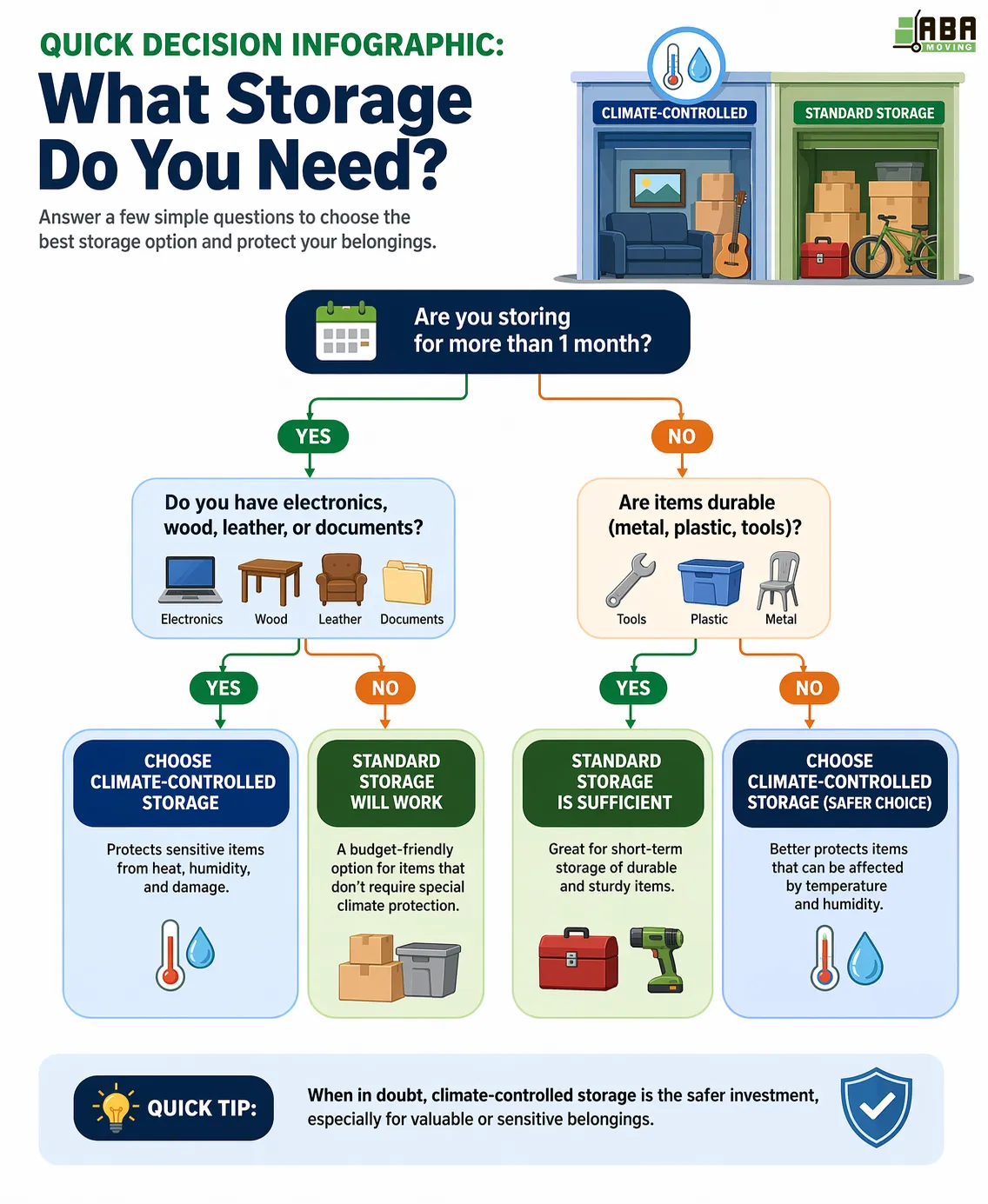
Quick Decision Infographic: What Storage Do You Need?
How ABA Movers Helps You Choose the Right Storage Without Overpaying
This is where working with professionals really changes the game.
At ABA Movers, we don’t just move boxes—we analyze your inventory and recommend the smartest storage solution based on:
- Item sensitivity
- Storage duration
- Budget
- Risk level
From our hands-on experience, the best solution is rarely “one-size-fits-all.” Sometimes we even recommend splitting storage:
- Climate-controlled for valuables
- Standard for durable items
This hybrid approach saves money and protects what actually matters.

Final Take: The Smart Way to Protect Your Belongings During a Move
Choosing between climate controlled storage vs standard storage is not about guessing—it’s about understanding risk, value, and timeframe.
If you remember one thing, let it be this:
Cheap storage can become very expensive if your items get damaged.
Play it smart:
- Sensitive + long-term → climate-controlled
- Durable + short-term → standard
And if you’re not sure—don’t gamble. Let ABA Movers guide you to the right storage solution so your move stays smooth, your items stay safe, and your stress stays low.